


Walking into a room full of people can feel awkward when no one really knows each other. Family gatherings and friend meetups often start with uncomfortable silence or small talk that never goes anywhere. Get to know each other games transform these tense moments into genuine connection and laughter. This guide shows you exactly how to plan, organize, and run these games so your gatherings become memorable, engaging events that everyone looks forward to.
Table of Contents
- Preparing To Organize Get To Know Each Other Games
- Step-By-Step Guide To Running Get To Know Each Other Games
- Common Challenges And Troubleshooting Tips
- Expected Benefits And Lasting Impact Of Get To Know Each Other Games
- Discover Engaging Games To Enhance Your Gatherings
- Frequently Asked Questions
Key takeaways
| Point | Details | |-------|---------|| | Games strengthen bonds | These activities improve communication skills and build emotional connections between participants. | | Planning matters most | Thoughtful preparation and consistent scheduling create successful game nights that become cherished traditions. | | Adaptation is essential | Adjusting games for group size and cultural sensitivity ensures everyone feels comfortable participating. | | Voluntary participation wins | Forced icebreakers backfire, while optional engagement keeps the fun authentic and inclusive. |
Preparing to organize get to know each other games
Successful game nights don’t happen by accident. You need a clear plan before anyone arrives.
Start by selecting games that match your group’s age range and personality. Trivia works great for knowledge lovers, while conversation prompts suit groups seeking deeper connection. Defining get to know each other games helps you understand which formats fit different gatherings.
Group size dramatically affects game choice. Small groups of four to eight people handle intimate sharing games beautifully. Larger crowds need activities that accommodate multiple simultaneous conversations without creating chaos.

Pro Tip: Test new games with a smaller group first to work out timing and rule clarity before introducing them to larger gatherings.
Gather your materials ahead of time. Some games need nothing but conversation, while others require cards, props, or a timer. Having everything ready prevents awkward pauses that kill momentum.
Cultural context shapes self-disclosure patterns significantly. Some cultures embrace open sharing immediately, while others prefer gradual trust building. Watch for comfort levels and adjust question depth accordingly.
Scheduling consistency builds tradition. Choose a regular date like the first Friday of each month so people plan around it. Predictability transforms one-time events into anticipated rituals that strengthen community bonds.
Consider these preparation essentials:
- Create a backup plan for different group sizes
- Prepare a music playlist for transitions between games
- Set up the space to encourage face-to-face interaction
- Have extra seating arranged in a circle or semi-circle
- Keep refreshments simple so they don’t distract from interaction
Step-by-step guide to running get to know each other games
Execution matters as much as preparation. Follow this sequence to keep your event flowing smoothly.
-
Welcome everyone warmly. Start by explaining why you organized this gathering. People relax when they understand the purpose and expectations upfront.
-
Introduce one game at a time. Explain the rules clearly using simple language. Demonstrate with an example so visual learners grasp the concept immediately.
-
Emphasize voluntary participation. Forced ice breaker activities backfire by creating resentment instead of connection. Let people opt out without judgment or pressure.
-
Use a speaking tool for turn management. A small ball or object passed around ensures everyone gets heard without interruptions. This simple technique prevents dominant personalities from monopolizing conversation.
-
Break large groups strategically. Divide gatherings of more than ten people into smaller circles. This prevents side conversations and ensures everyone participates meaningfully.
-
Allow silence for reflection. Don’t rush responses. Pauses give introverts time to formulate thoughtful answers instead of defaulting to surface-level responses.
-
Model active listening. Facilitators who emphasize listening skills create safe spaces for vulnerability. Make eye contact, nod, and respond to what others share.
Pro Tip: Start with lighthearted games before moving to deeper questions. This progression builds comfort gradually without overwhelming new participants.
Manage energy levels throughout the evening:
- Begin with high-energy activities to break initial tension
- Alternate between movement and seated games
- Save emotional or reflective games for mid-session when trust has developed
- End with a celebration activity that leaves everyone feeling positive
Avoid elimination-style formats that leave people sitting out. These create awkwardness and defeat the purpose of bringing everyone together. Focus on inclusive activities where everyone stays engaged from start to finish.
For more get to know each other games planning strategies, explore age-appropriate options and timing recommendations.
Common challenges and troubleshooting tips
Even well-planned events hit snags. Recognize these issues early and adjust quickly.
Noise overwhelms sensitive participants in large group settings easily. Multiple conversations happening simultaneously create auditory chaos that makes focusing impossible. Split big groups into rooms or corners so each small circle can hear clearly.
Competitive tension ruins connection-focused events. Games involving elimination lead to arguments because losing feels personal during vulnerable sharing moments. Replace competitive formats with cooperative challenges where everyone wins together.
Overstimulation affects both children and adults. High energy games are fun initially but exhaust people quickly. Schedule calming activities or short breaks between intense rounds so participants can reset mentally.
“The best game nights balance excitement with moments of quiet reflection, allowing different personality types to shine at different times.”
Manage these specific scenarios effectively:
- Dominant talkers: Implement time limits per person and use a visible timer everyone can see
- Silent participants: Offer alternative participation like written responses or partner sharing first
- Inappropriate sharing: Establish boundaries upfront about keeping content family-friendly and respectful
- Energy crashes: Keep healthy snacks available and allow people to step out briefly without explanation
Here’s how different group sizes affect common challenges:
| Group Size | Primary Challenge | Solution |
|---|---|---|
| 4-8 people | Pressure to share deeply too quickly | Start with surface-level prompts, build gradually |
| 9-15 people | Managing turn-taking fairly | Use timed rounds or divide into two groups |
| 16+ people | Maintaining engagement for all | Create stations with different game types |
For large group game strategies that prevent chaos, consider rotation systems where small groups experience different activities simultaneously.
When technical issues arise like missing materials, improvise confidently. Most connection games need only conversation and creativity.
Expected benefits and lasting impact of get to know each other games
These gatherings create ripple effects far beyond a single evening of fun.
Family game nights build communication skills and emotional bonds that strengthen relationships permanently. Children learn to express feelings clearly while adults rediscover playfulness they’d forgotten. These shared experiences become the stories families retell for years.
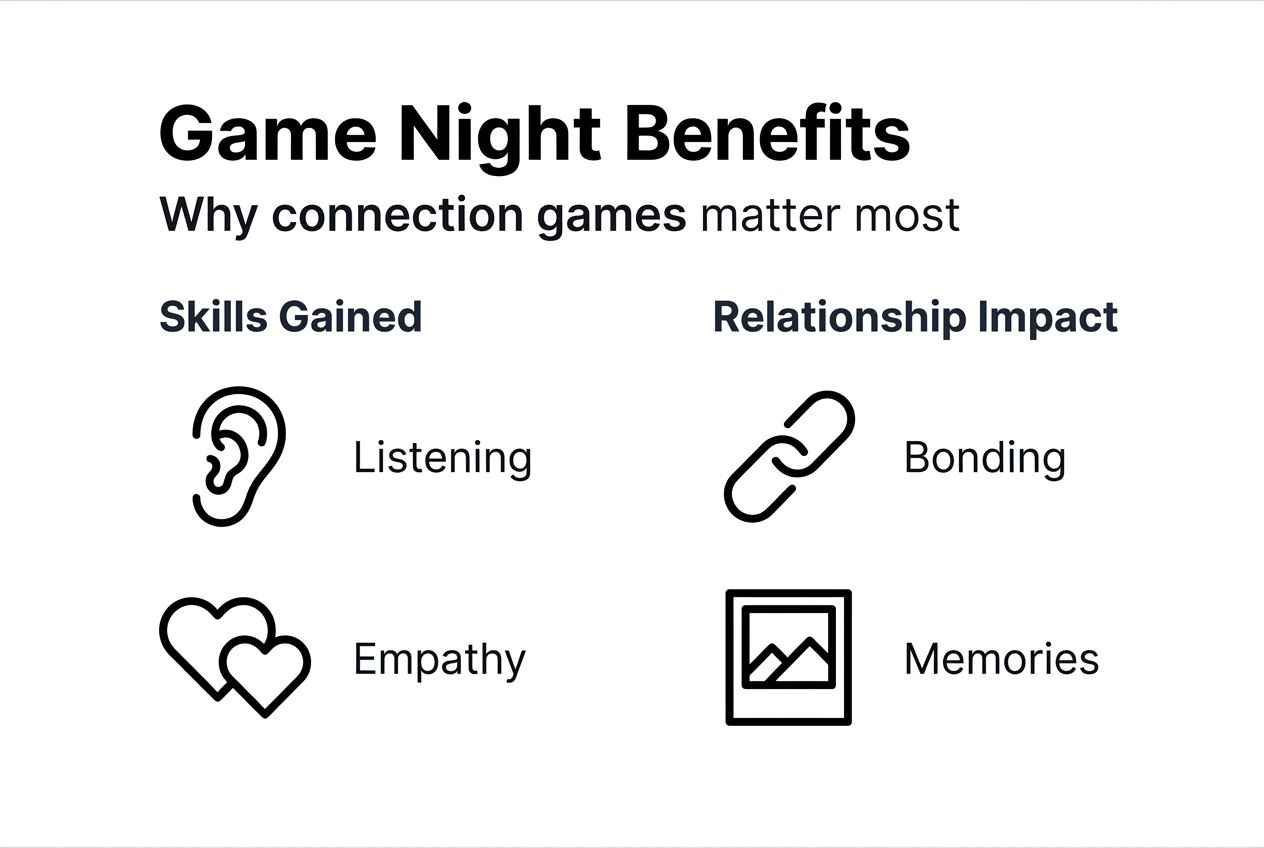
Social anxiety decreases significantly through repeated exposure in safe environments. People who dread small talk discover they actually enjoy meaningful conversation when structured properly. Confidence grows with each successful interaction.
Cognitive benefits extend across all ages. Playful social activities enhance well-being and mental sharpness in both young children developing social skills and older adults maintaining cognitive resilience.
“Regular social play creates neural pathways that support emotional regulation, empathy development, and creative problem solving throughout life.”
Track these tangible improvements over time:
- Participants arrive earlier and stay later voluntarily
- Conversations continue naturally between scheduled game nights
- People bring friends and family members to future events
- Group chat activity increases with shared jokes and memories
- Attendance rates climb as the tradition strengthens
Memory formation works powerfully during emotionally positive experiences. The laughter and vulnerability shared during these games create lasting bonds that mere acquaintanceship never achieves.
Mental health improves through community connection. Loneliness decreases when people have regular social touchpoints they anticipate. These gatherings combat isolation by providing consistent, meaningful human interaction.
For more about benefits of social games across different contexts, explore how various formats support different relationship goals.
Discover engaging games to enhance your gatherings
You’ve learned the why and how. Now find the perfect games to bring your vision to life.
Transforming your gatherings starts with having the right tools at your fingertips. Whether you’re planning an intimate family night or a larger friend gathering, having conversation starters and interactive challenges ready makes hosting effortless.

PlayWorldGame offers curated collections of fast-paced social games designed specifically for real game nights, not classrooms. From conversation cards that spark genuine connection to challenge games that get everyone laughing, you’ll find options for every group size and vibe. Skip the planning stress and grab games that actually work for modern gatherings where fun and connection happen naturally.
Frequently asked questions
How do I choose the best get to know each other games for my group?
Consider three factors: group size, participant ages, and comfort levels with sharing. Smaller groups handle deeper conversation prompts well, while larger crowds need activities that accommodate multiple simultaneous interactions. Match game intensity to your group’s familiarity level, starting light and building depth as trust develops.
What if some participants refuse to join the games?
Never force participation, as pressure creates resentment instead of connection. Offer alternative roles like timekeeper or scorekeeper so non-participants still feel included. Often, reluctant people join voluntarily after watching others have fun without judgment.
How long should each game last during a gathering?
Most connection games work best in 15 to 20 minute segments. This duration allows meaningful interaction without exhausting participants. Plan for three to four different activities during a two-hour gathering, leaving buffer time for transitions and spontaneous conversations that emerge naturally.
Can get to know each other games work for culturally diverse groups?
Absolutely, with thoughtful adaptation. Research cultural communication norms beforehand and offer various participation styles like written responses or partner sharing. Avoid assumptions about comfort with self-disclosure, and let participants choose their depth of sharing without pressure.
How do I handle overly personal or inappropriate responses during games?
Establish ground rules upfront about keeping content respectful and appropriate for all ages present. If someone crosses boundaries, gently redirect with humor rather than calling them out harshly. Have a private conversation later if the behavior continues, explaining how it affects group comfort.
What’s the ideal frequency for hosting these game nights?
Monthly gatherings work well for most groups, providing regular connection without overwhelming schedules. Consistency matters more than frequency, so choose an interval you can maintain long term. Quarterly events work for busy groups, while weekly meetups suit retired communities or close-knit neighborhoods.